Drew Ludwig · 17 September 2026
Sediment Dynamics and Structural Adaptations in Layered Wharf Designs for Coastal Resilience
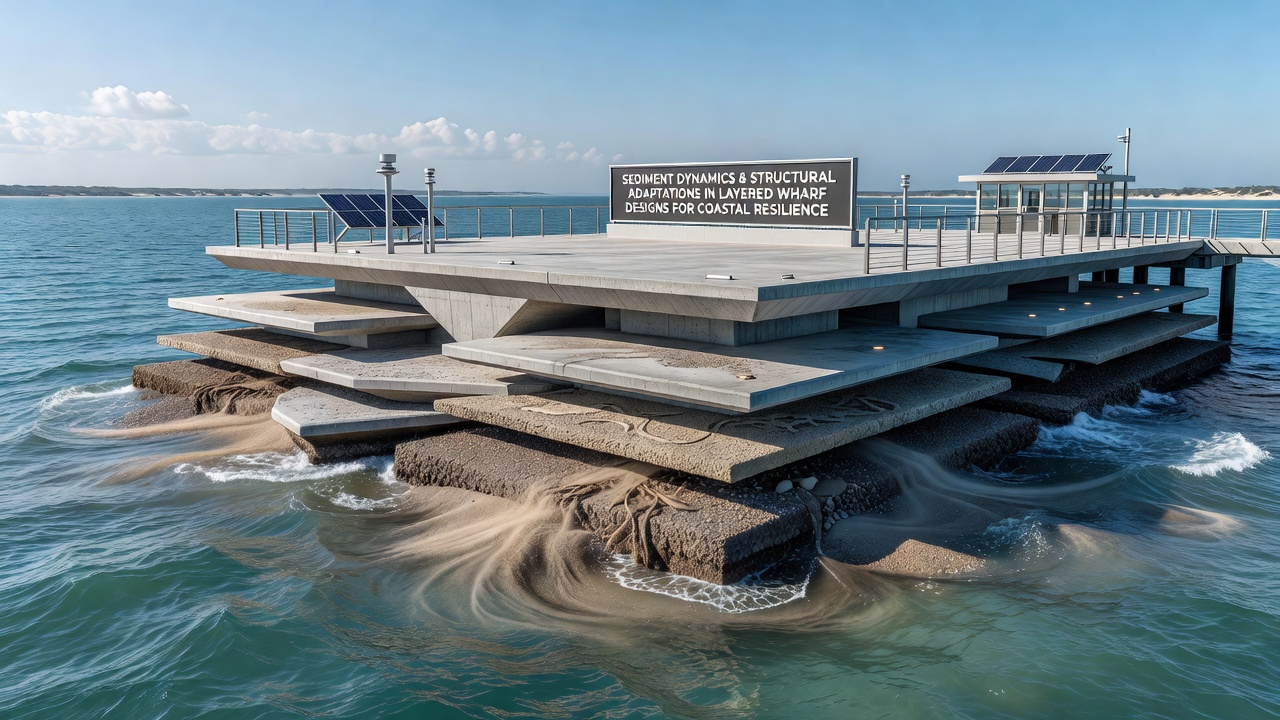
Coastal infrastructure faces constant pressure from sediment movement driven by waves, tides, and currents, and layered wharf designs address these forces through engineered stratification that balances stability with environmental interaction. Researchers track sediment transport rates in port areas where annual volumes can reach several hundred thousand cubic meters, and these figures reveal how unchecked erosion undermines foundations while accretion can block navigation channels. Layered systems incorporate base stabilization, filter fabrics, and surface armoring to manage these flows without halting natural processes entirely.
Sediment Movement Patterns in Wharf Environments
Studies from the United States Geological Survey document how longshore currents redistribute sand and silt around wharf pilings, creating scour holes that deepen by up to two meters during storm events. Data collected at multiple North American ports shows that fine-grained sediments often settle in low-velocity zones behind structures, whereas coarser materials remain mobile under moderate wave action. Engineers therefore design each layer to accommodate specific grain sizes, with coarser aggregates at the base providing drainage while finer materials higher up reduce permeability and limit internal erosion.
Monitoring programs in Australian coastal zones have recorded seasonal shifts where winter storms export sediment offshore and summer conditions return portions to the shoreline. These cycles influence wharf performance because excess sediment can increase lateral loads on vertical faces, whereas deficits expose footings to direct wave impact. Observers note that real-time bathymetric surveys now feed into predictive models that forecast deposition zones weeks ahead, allowing maintenance crews to adjust dredging schedules accordingly.
Layered Construction Methods and Material Selection
Modern layered wharf construction begins with a compacted granular base that distributes loads across variable seabed soils, followed by geotextile separators that prevent mixing between dissimilar particle sizes. Above this, engineers place intermediate layers of crushed stone or concrete units sized to resist the design wave climate, and the uppermost deck incorporates drainage channels that direct runoff away from critical joints. Research from the European Environment Agency indicates that such configurations can extend service life by fifteen to twenty years compared with monolithic designs in similar exposure conditions.
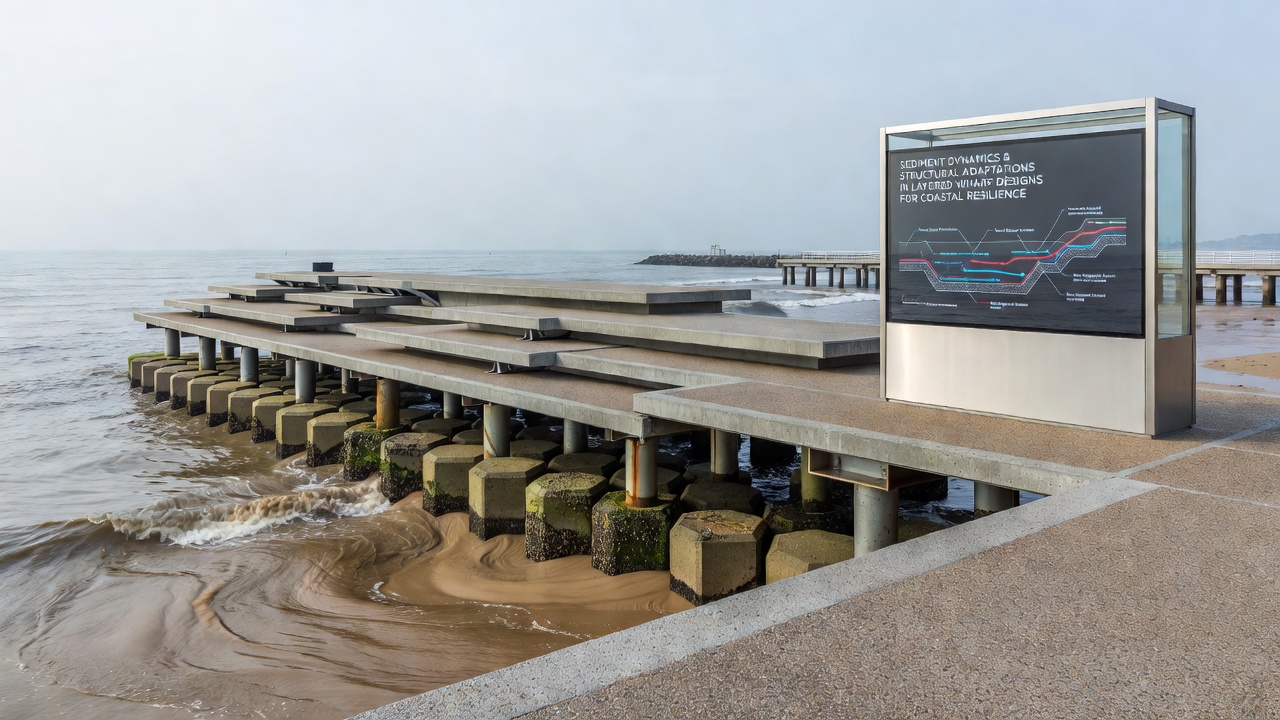
Adaptations for dynamic sediment conditions include permeable toe protections that allow some material passage while maintaining overall stability, and articulated concrete blocks that settle individually when underlying sediment shifts. In regions where sea-level rise accelerates, designers incorporate adjustable crest elevations or sacrificial layers that can be replenished without full reconstruction. Canadian port authorities have implemented hybrid systems combining traditional rock armor with living shoreline elements that trap sediment and reduce reflection effects on adjacent beaches.
Performance Data from Operational Sites
Long-term records from facilities in the Netherlands demonstrate that layered wharves maintain structural integrity under sediment transport rates exceeding 150,000 cubic meters per year, with measured settlement remaining within design tolerances. Instrumentation embedded in these structures records pore pressure changes that correlate directly with tidal cycles and storm surge events, providing early warning when internal drainage begins to clog. Similar installations along the Pacific coast of South America report reduced maintenance frequency after incorporating sediment bypass channels that maintain natural littoral drift around the wharf footprint.
Case examples from Singapore ports highlight how layered approaches accommodate rapid urban development alongside resilience needs, where reclaimed land creates new sediment sources that must be managed through strategic placement of filter layers. These projects integrate real-time sensor networks that track both structural strain and adjacent seabed elevation, allowing operators to respond before cumulative changes affect load-bearing capacity.
Future Monitoring and Planning Considerations
Preparations for updated coastal resilience assessments scheduled for release in September 2026 continue to incorporate expanded sediment budget analyses from layered wharf sites worldwide. These efforts draw on expanded satellite imagery and autonomous underwater vehicle surveys that map changes at sub-meter resolution, revealing previously undetected migration pathways around complex structures. The resulting datasets support refined design guidelines that prioritize adaptability over rigid resistance to sediment movement.
Conclusion
Layered wharf designs integrate understanding of sediment dynamics with targeted structural adaptations that preserve coastal functionality while accommodating natural transport processes. Evidence from multiple continents shows measurable improvements in longevity and reduced intervention frequency when these principles guide construction and maintenance decisions. Continued data collection through established monitoring networks will refine these approaches as environmental conditions evolve.