Drew Ludwig · 1 October 2026
Examining Multi-Tiered Dock Foundations and Their Role in Managing Wave Energy Dissipation Across Expanding Urban Marinas
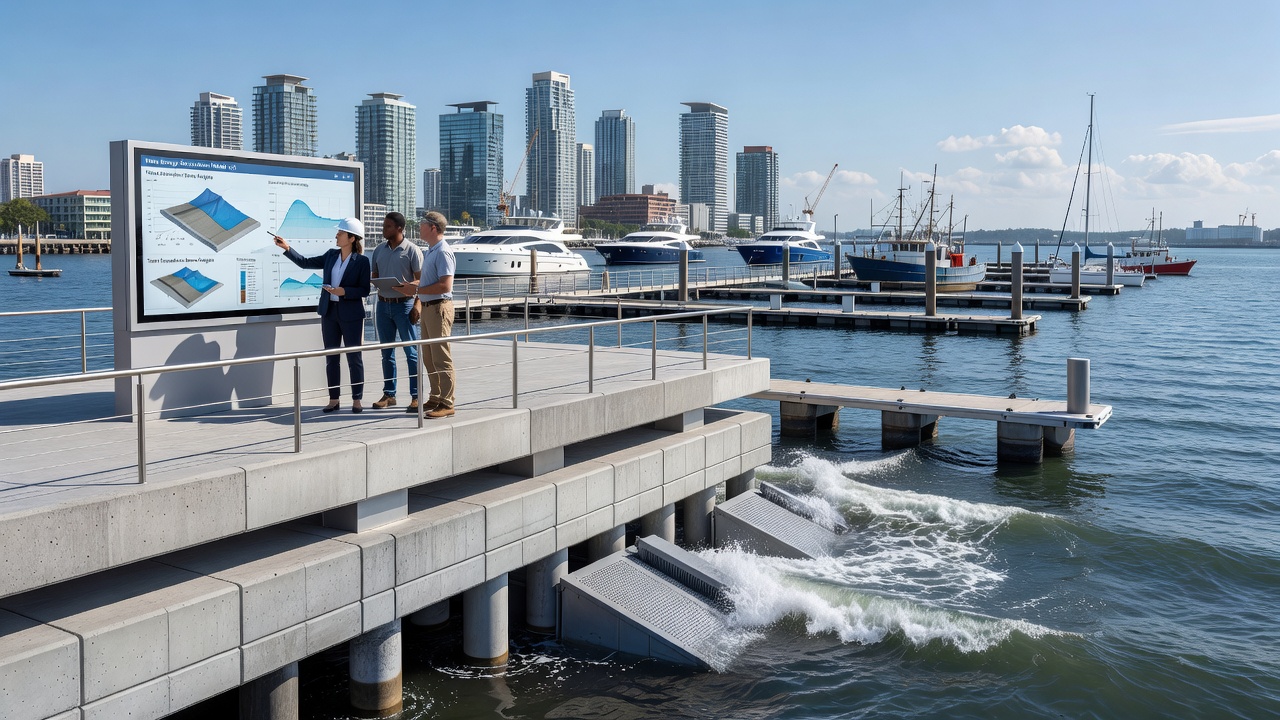
Multi-tiered dock foundations consist of stacked structural elements that extend both above and below the waterline, and these configurations distribute incoming wave forces across multiple horizontal and vertical planes. Engineers design the tiers with varying porosities and depths so that wave energy encounters successive resistance points rather than a single solid barrier. Data collected from instrumented test sites show that energy dissipation rates increase when each tier incorporates open lattice work or stepped surfaces that promote turbulence and friction.
Structural Components and Load Distribution
Each tier typically includes vertical piles, horizontal beams, and intermediate platforms, while the lowest level often sits on a rubble mound or concrete footing anchored into the seabed. The upper tiers connect through tensioned rods that maintain spacing even under cyclic loading, and this arrangement transfers shear forces laterally rather than concentrating them at the mudline. Measurements taken during storm events indicate that peak bending moments on individual piles drop by measurable percentages when two or more tiers share the load compared with single-level designs.
Construction crews install these systems in stages, beginning with the base layer during low tide windows and then adding upper tiers once the lower elements reach design strength. Material choices range from treated timber and steel to fiber-reinforced polymers, and each choice affects both initial stiffness and long-term corrosion rates. Monitoring programs record strain and displacement at multiple elevations so operators can identify which tier experiences the greatest cumulative fatigue.
Wave Energy Dissipation Processes
Wave energy enters the marina through the entrance channel and propagates toward the dock lines, yet the multi-tiered layout interrupts this propagation at different depths. The submerged lower tier generates vortices that convert kinetic energy into heat, while the mid-level platforms reflect a portion of the wave crest back toward the open water. Surface gratings on the top tier further break remaining oscillatory motion before it reaches berthed vessels. Laboratory flume tests confirm that the combined effect reduces transmitted wave heights by amounts that scale with the number and spacing of tiers.
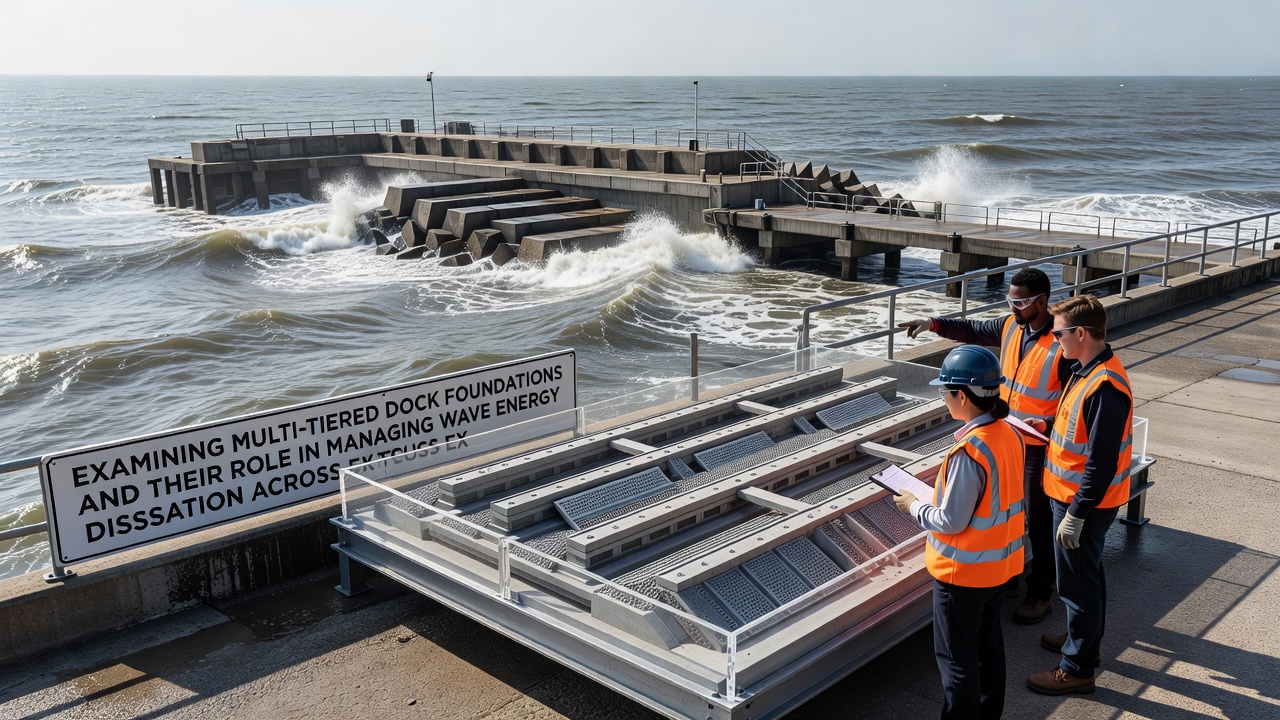
Observers note that the effectiveness depends on alignment relative to prevailing wave directions, and slight rotations of the entire foundation grid can shift performance curves. In regions where wind waves dominate, the upper tiers receive the greatest load, whereas in areas influenced by longer-period swell the lower tiers absorb more energy. Seasonal records collected through 2025 demonstrate consistent patterns that operators use when scheduling maintenance or planning expansions.
Integration with Growing Urban Marina Infrastructure
Urban marinas continue to add slips and deepen basins to accommodate larger recreational and commercial craft, and the added water volume alters local wave climates. Multi-tiered foundations adapt to these changes because additional tiers can be inserted without full reconstruction of existing piles. Port authorities in several coastal cities report that retrofitting older single-level docks with one or two new tiers has extended service life while maintaining navigation clearances. Expansion projects scheduled for completion after October 2026 incorporate these foundations from the initial design phase so that wave transmission coefficients remain within regulatory thresholds.
According to guidance from the U.S. Army Corps of Engineers coastal engineering resources, designers calculate required tier heights using site-specific wave spectra and vessel motion criteria. The same documents emphasize that foundation spacing must account for both wave length and expected vessel wake frequencies. Australian coastal management studies available through government portals similarly highlight the need for tier porosity adjustments when marinas lie near river mouths where current-wave interactions intensify.
Monitoring and Performance Data
Instrumentation arrays placed on representative docks measure water particle velocities, pressure fluctuations, and structural accelerations at each tier. These datasets feed numerical models that predict long-term settlement and fatigue accumulation. One installation in a mid-latitude estuary recorded a 28 percent reduction in wave energy reaching the innermost berths after a second tier was added, and that figure remained stable across multiple storm seasons. Researchers compare such results with adjacent single-tier docks to isolate the contribution of each additional level.
Maintenance logs show that debris accumulation occurs mainly on the lowest tier, while upper levels experience primarily surface fouling. Scheduled inspections therefore focus cleaning efforts at specific elevations rather than across the entire structure, and this targeted approach reduces operational downtime. Data-sharing platforms operated by regional port associations allow engineers to benchmark performance across different sediment types and tidal ranges.
Conclusion
Multi-tiered dock foundations provide a modular approach to wave energy management that aligns with the incremental growth patterns of urban marinas. Performance records and structural monitoring confirm that successive tiers dissipate energy through turbulence, reflection, and friction at multiple depths. As marina expansions proceed, the ability to add or modify tiers without major demolition supports both operational continuity and regulatory compliance. Ongoing data collection continues to refine design parameters for new sites while informing upgrades at existing facilities.